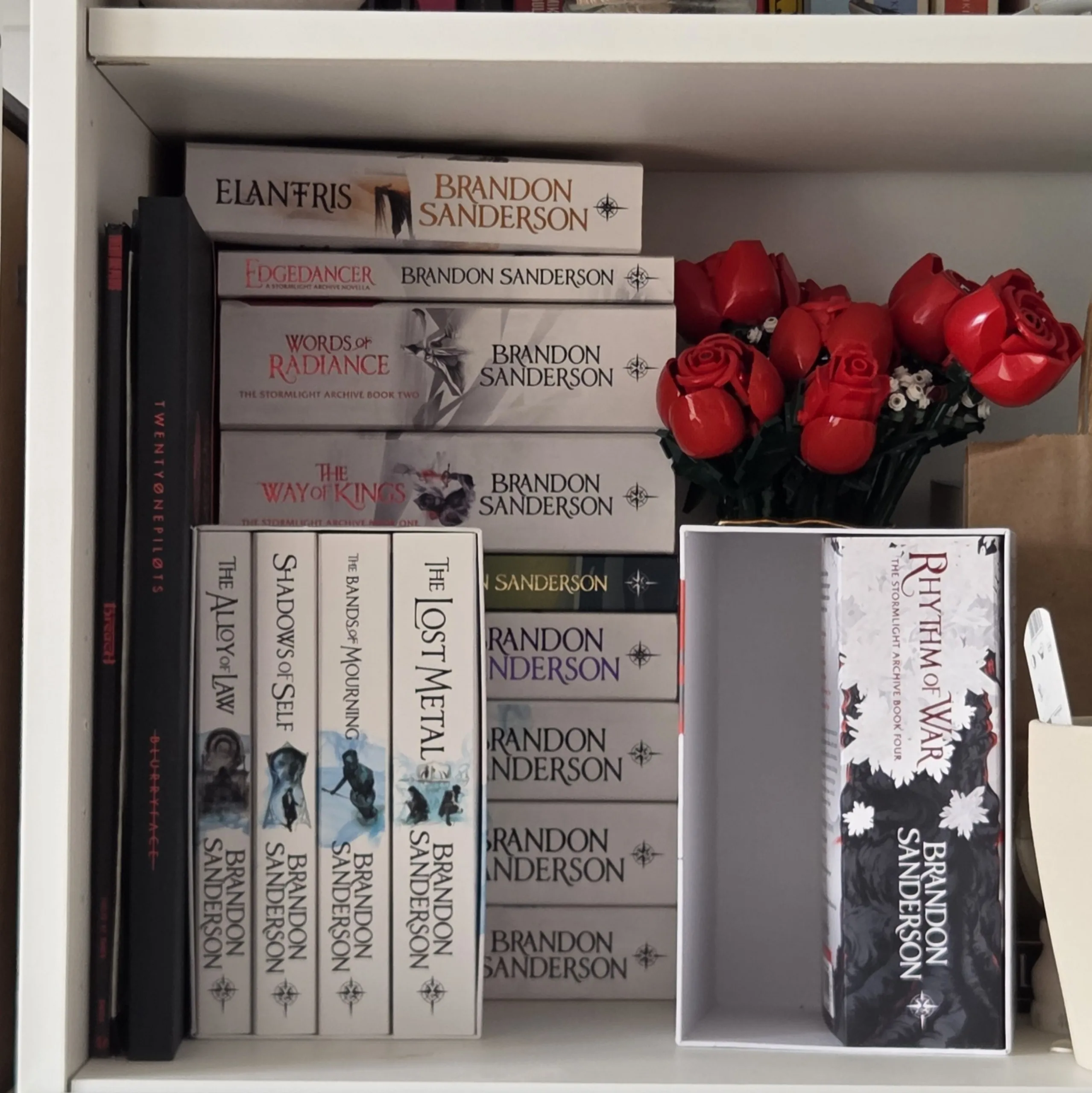
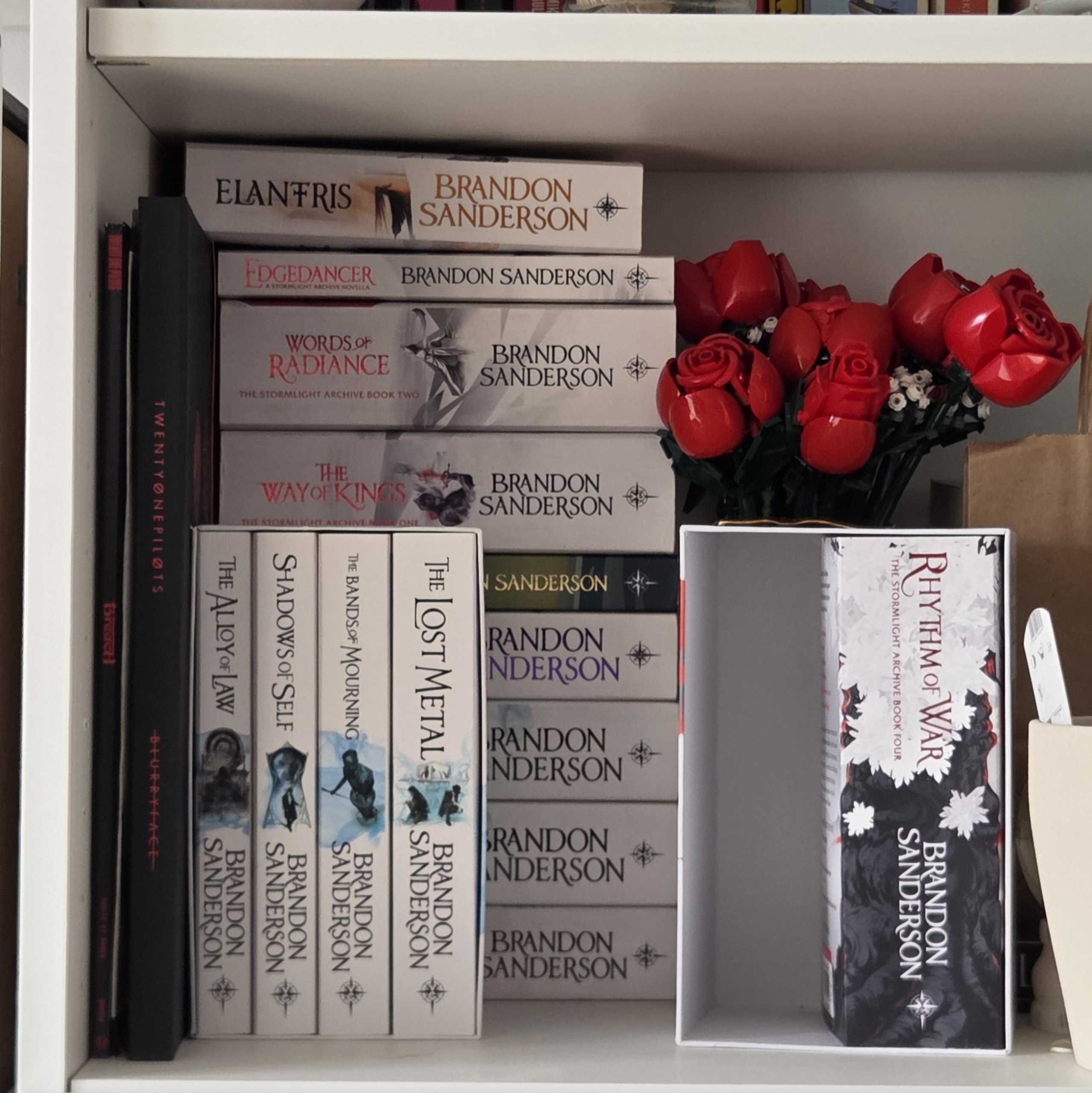
A More Convenient Book
This one is, ironically, a bit of a read. Might have gotten carried away writting about a topic I like. Whoops
Why you should read
Doom Scrolling has been plaguing our society more and more over the past decade. With the rise of “social” media and the availability of smartphones around the world, predatory attention grabbing techniques have taken our lives by storm.
Everywhere you go, you see people looking down at a tiny plastic rectangle in their hands. While walking, while “talking” to someone else at a café, while commuting. Hell, I’ve even seen 1 or 2 year old babies just glued to the screen. I can’t even begin to picture the brain and congnitive development issues that society will face in one or two decades.
I digress.
To try and improve not just my mental health but also physical health, I’ve been making a concious effort for some years now to reduce screen time. It started out by uninstalling social media apps, leaving my phone in silent mode turned down in another room and disabling some apps’ notifications. This already went a long way, and made me feel better. Less tired, more aware, more present.
With that came another benefit: more time. Time I can spend doing something I like doing.
And what better way to relax at the end of the day than reading a good book? Since I was trying to reduce screen times, watching TV/youtube was out of the question. So I returned to an old, forgotten hobby: reading.
Finding the passion
I’ve loved reading since my early teens. I remember starkly when I was about 12/13 years old and was on vacation for two weeks with my family. This was around 2010 mind you, so social media wasn’t a thing. Hell, smartphones weren’t a thing! My phone had a resistive screen back then!
On our second or third day, we passed by a street book market and my mom asked if I wanted to get a book for the vacations. I browsed a bit and said to myself “Sure, why not? There’s not much to do anyway.”, so I ended up picking up The Hunger Games. Yes, the hit 2012 movie is, in fact, based on a book. I know, shocking.
This happened on a night stroll, after we had dinner in a nearby town. After two days, I was asking my parents for the second book. I devoured almost 400 pages in two days. This is where my real passion for reading began. Geting immersed in another world, living adventures through the character’s experiences. Feeling joy, sadness, wonder and so many other feelings just by reading something that another human came up with and built felt amazing. It still does.
Throughout the years I’ve read many more fantasy and non-fantasy books. From Murakami to Goggins, Robert Green or Lao Tsu. I’ve read quite a lot over the past two decades. And it’s come full-circle. It started out with an almost addiction to fantasy books like The Hunger Games, Shadow and Bone (shoutout to the Six of Crows, one of my all time favourites to this day) and Kafka on the Shore.
In my college years I started to delve deeper into psychology/philosphy, personal development and finance like Mastery, The 48 Laws of Power, The Power of Habit, Ikigai, Deep Work, Rich Dad, Poor Dad and many others. Partly because a colleague of mine read The 48 Laws of Power and it got me intrigued. I borrowed the book from him and then ended up buying it and Mastery. Everything else came after.
During the last college years I started to question… well, life, more (I guess). I started reading more philosophical books like The Art of War, The Obstacle is the Way and Tao Te Ching. It was a time of self-discovery and character definition. After started working and dating, free time started to become scarcer and reading became more of a thing I did.
The great comeback
Fast forward a few years of not feeling like reading because my head was already pounding at the end of the day, I started to try and improve that aspect of my life. I didn’t want to get to the end of the day completelly drained and with no will to do anything productive. This was, in part, due to the amount of time I spent staring at a screen, like I mentioned previously.
So I decided to somewhat force myself to read again. I started with some unfinished books I had. Most about personal development or heavier topics like philosophy. Stuff that makes your brain work. Which was exactly the oposite of what I needed. This made me feel like not reading that much. I’d read a couple pages one day, then stop for 2 or 3 days, then read one page, and so on.
One day I realized I just wasn’t reading what I wanted. I was reading what I thought would be good to read, either because I saw the book on a “must read” list, short or because it was on my “to-read” list.
At the time I’d been playing Dungeons and Dragons with a group of friends for a couple years now, and the Fantasy aspect of it was what really intrigued me. So much so that I started writting my own setting and running my own adventures. It was then that I realized what I was missing to really get back into reading: the right book.
At around the same time, the Lisbon Book Fair was happening and as per tradition my girlfriend and I attended it.After going up and down the park browsing all the stands, the books that I kept looking at were 90% Fantasy books. There was one in specific that really caught my eye: The Way of Kings. Everything about it screamed “READ MEEE!!! You’re really gonna like it!”, from the title, to the cover, to the summary. And, spoiler alert, it was true.
I didn’t buy it right away because the engineer in me had to do some research first, before making a decision. We were already tired so after a quick search, I found the book online for about the same price. I postponed the purchase and we went home. I ended up buying some small books that I’ve really come to enjoy from the Penguin’s Little Black Classics collection.
A few days after I was buying Mistborn, the recommended first book for Brandon Sanderson (The Way of Kings’ author). And I felt like I was 14 again. I read the book in less than a week. Every little bit of free time I had went into the book: lunch hour, waiting for anything, before dinner, after dinner, in bed, in the toilete. I got completelly hooked into this world where people consume little flakes of metal and get super powers, everything is controlled by a god-like tyrant emperor and mysterious mists bring about unkown dangers. It was the perfect escape from real life worries and responsibilities. Of course I didn’t stop dealing with those, but it felt good for just 30 minutes to forget those exist and relax a bit. It was also important to be able to deal with these adult challenges with a clearer, less stressed mind.
More Adventures and the Rise of an “Issue”
After that, I bought the rest of the trilogy and kept on getting immersed in this world, unraveling it’s mysteries and understanding the characters’ motivations and goals. It was a lot of fun. And Brandon Sanderson is a master world-builder. He’s books have a world with very well defined mechanics and the characters have distinct personalities and goals, that really fuel the political drama and actions of the main characters.
Since then, I’ve accumulated and read over a dozen of Brandon Sanderson’s book.
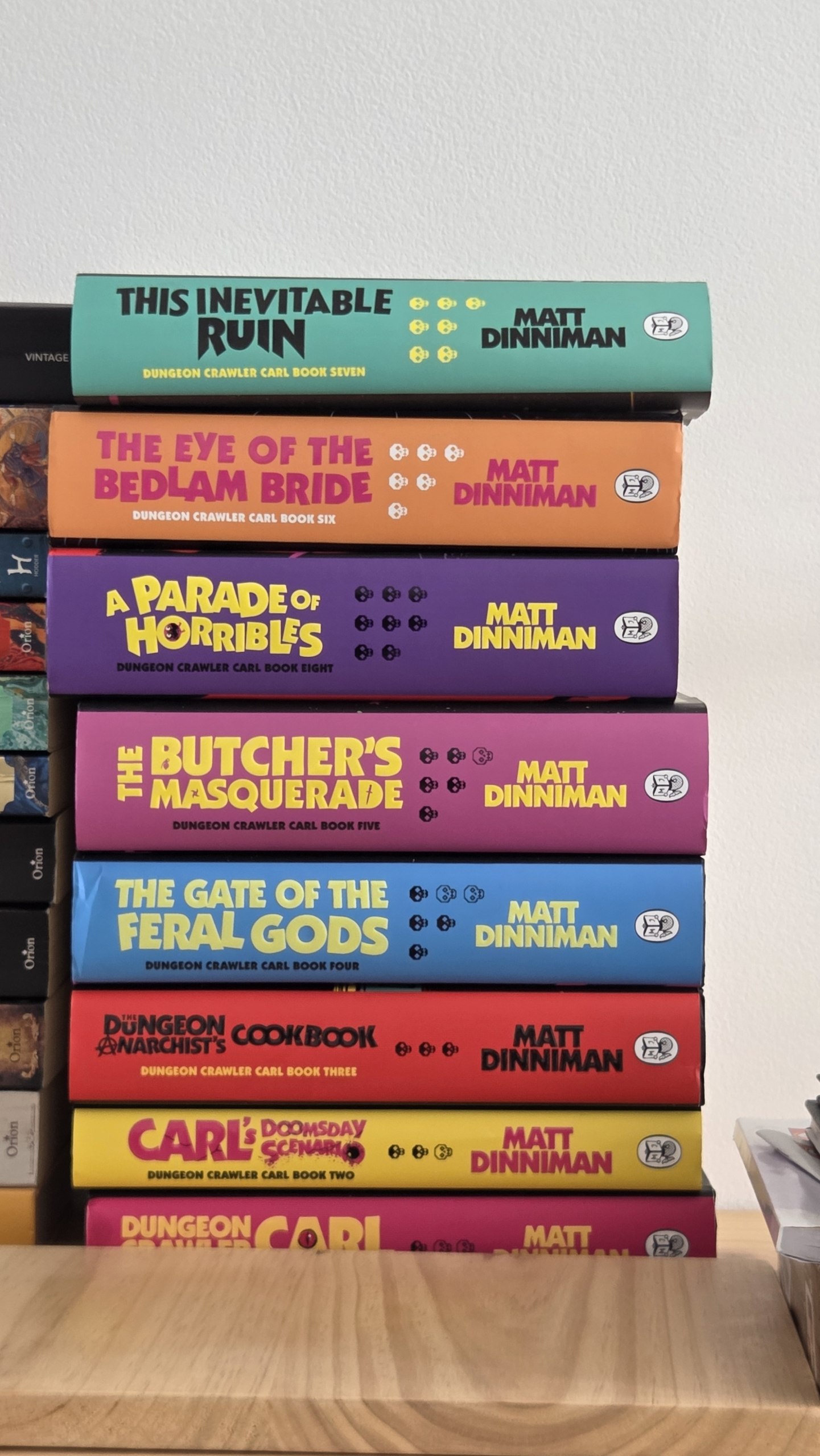
I’ve also read almost all of Matt Dinniman’s Dungeon Crawler Carl (DCC) books. These ones were the real addiction. They are a fast paced, D&D like high-fantasy action with wacky characters and an even wackier premisse: Aliens have come to claim back Earth and make a reality show out of it:
Survive an 18 layer dungeon and become owner (?) of Earth. Plot-twist (not really): no one has ever reached level 18 so it’s all a scam to make the plane’ts inhabitants fight for profit in the intergalactic TV streaming while mining the planet of it’s natural resources to fuel a multi-alien conglomerate of AI-run galaxies with a tangled mess of interplanetary politics and agendas behind it.
I told you it was wacky.
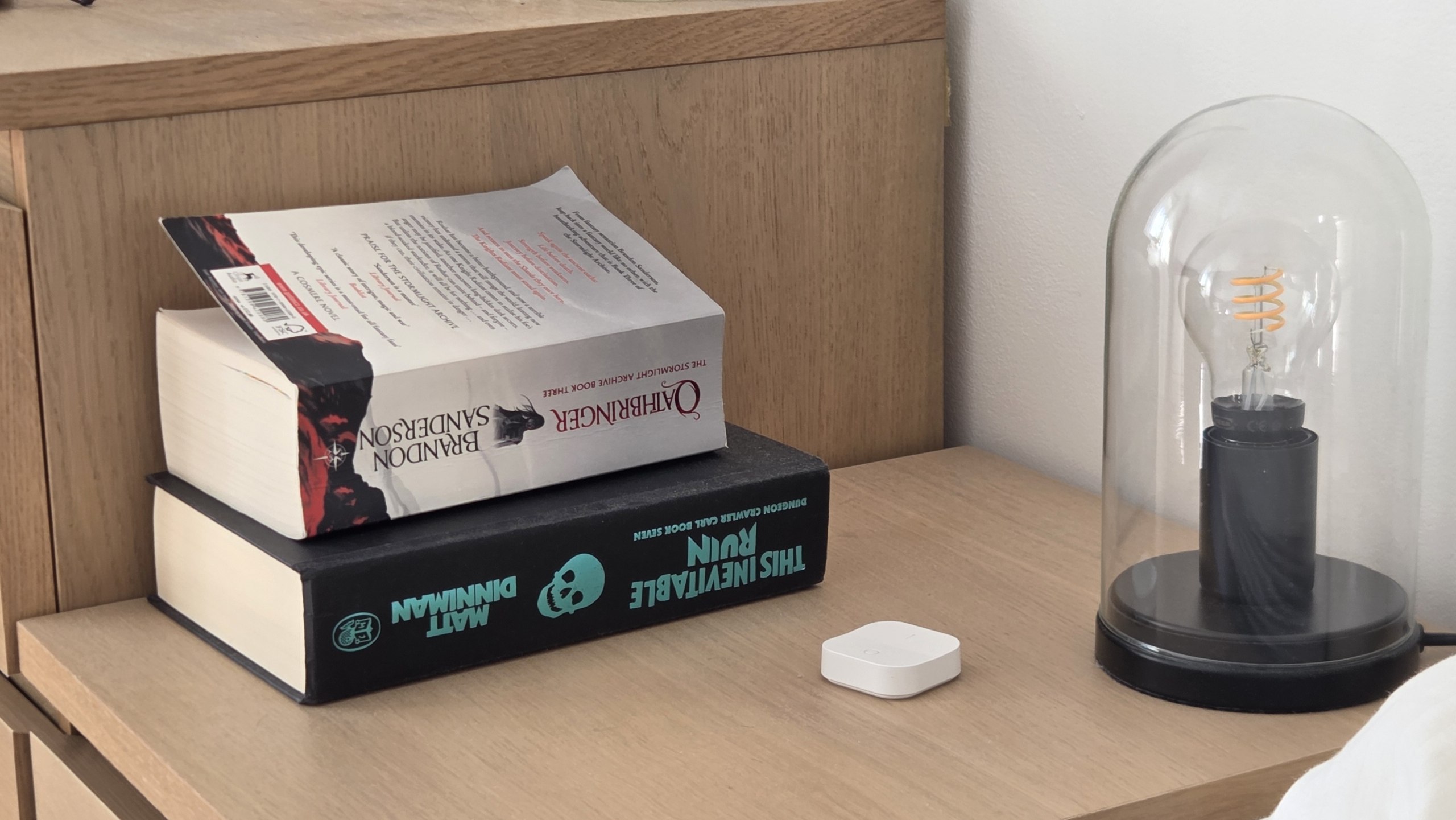
Bottom line: This ammounts to over 20 books in the span of maybe… an year? Year and a half maybe. And I’m not talking about those puny 300 or 400 pages books. I’m talking about hard-cover 1000+ pages books that weight 1Kg (2.2 pounds you know what, this is an engineering website, learn metric 🙄).
So three issues started developing.
- Books are a bit heavy and big. It makes them unhandy to bring with me while going out and while reading in bed. Plus they are noisy enough to wake up my girlfriend when I stay in bed reading for too many hours to disclose here. Let’s just say I’ve slept less than 6h because of it sometimes… 👀
-
It quickly becomes expensive. It would be ok if I bought 1 book a month. But at the rate I’m reading, specially DCC books, I’ve bought 2 or 3 per month. That adds up.
-
Last, but not least. I’m running out of space to store the books! We already had too many books and not enough bookshelves or bookcases to store them, and here I am buying 20+ huge books in less than 12 months.
Solution?
So I started to heavily consider getting an e-book reader. Much to my displeasure, because I like having a physical book in my hands, that would be the logic solution. Not only the physical factor but also the screen factor. Which, coming back to my previous point, I wanted to avoid/reduce as much as possible.
Then I remembered: e-readers nowadays use e-paper displays. Those are non-emissive so the issue of “staring at a screen” is not really an issue. It’s technically doesn’t emit light, so it doesn’t strain and fatigue the eyes the same way a conventional display does!
I started researching. Starting with the default: Amazon Kindle. These are nice. They have a decent price, size and functionality. But… being stuck in an closed ecosystem doesn’t very appealing to me. I want to have more freedom with this kind of device.
Then I came uppon something that is very close to what I want. And if you’ve done some research on this topic you’ll know the name: Xteink x4. This is a palm size (smaller than a smartphone) e-reader. Best part: unlocked firmware. You can flash it with whatever you want. No third-party restrictions. That’s amazing. And it is so small and light that it can easily be thrown into my daily sling-bag or a pocket, so it’s easily available any time, anywhere. There are two caveats to this solution though: Price and according to user-reviews lack of backlight. I can live with the second, as physical books don’t have a backlight. But the price tag, for what it is, really put me off for now.
Solution!
So I started looking at other alternatives. That’s when I found the Waveshare ESP32-S3 e-paper 3.97”. It was half the price, basically same functionalities and even more firmware freedom. This, of course came with it’s downsides. More freedom means more work to get it working. But it also opens up a lot more possibilities. This also brought some more advantages: I get to work with an ESP32, which is something I’ve been wanting to do for a while.
The board has everything I need right now:
- e-paper display
- ESP32-S3
- TF card reader (virtually unlimited storage for books)
- cool 3-way rotary switch for easier navigation
- Li-Po battery connector
- USB-C
- onboard BMS
Plus some extras like: wifi, audio input and output, T&H sensor and 6-axis accelerometer + gyroscope.
I immediately when searching for it. I ended up buying one without battery because the battery kit was out of stock at the time and I saw my local electronics store and amazon had plenty of batteries that could fit under the board. Boy what a mistake that was…
Current Status
A few weeks after, I got the board. I boot it up through USB and flashed it with a nice english fork of the original Waveshare repo. It works great. I also 3d printed the bottom of a housing for a test fit. Since it doesn’t have a battery, it has just been sitting on my desk as a clock while I wait for a battery to fully assemble it.
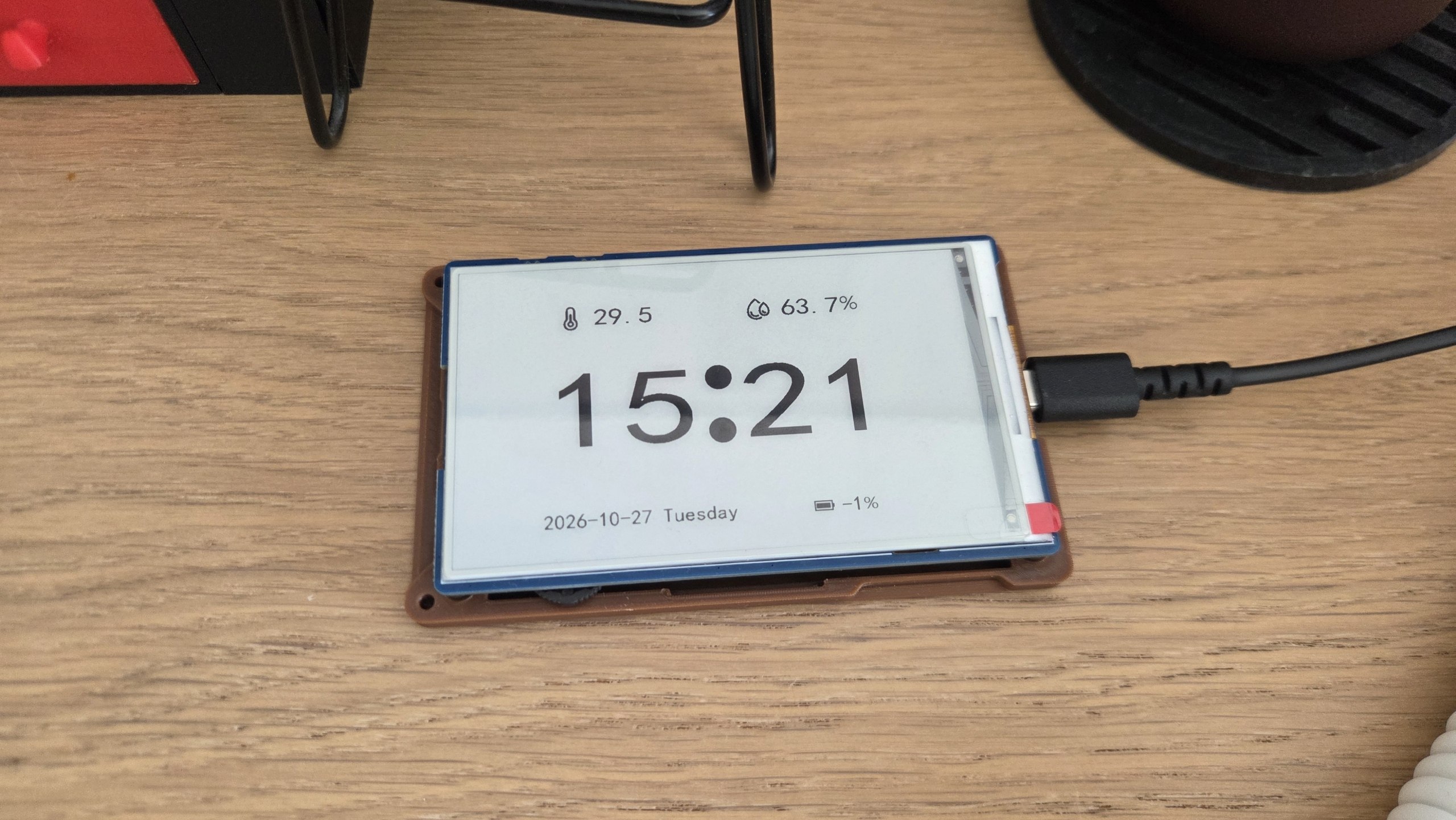
And this is where I’m stuck at a crossroads. This 3d print is designed for the battery that this board usually comes with. This battery is very very specific and hard to find. It’s a 1500mAh Li-Po with the model number 454261 and a 2pin JST connector. The connector part is a bit irrelevant since I can just buy a loose one and crimp it myself. The hard part is the battery and it’s very specific dimensions, 4.5 x 42 x 61 mm3.
Local shop doesn’t have it, or anything smaller with a decent capacity. Amazon doesn’t either. Any 1500mAh batteries they have are physically bigger. The only one I found was selling in eBay and came from china. It cost ~20€. Not too much, but more than usual for this capacity. Plus it takes 3-4 weeks to arrive.
If I’m going to wait for so long, might as well look up the usual chinese sites. But, to my surprise, not even aliexpress has this battery. So in a desperate attempt at finding this battery at a decent price, I started looking for it in Alibaba. Yes, the website where companies go to source high-volume components directly from china. From experience, I know they sometimes send samples almost for free. It’s worth a shot.
So now I have two options: Try to source this from Alibaba at a decent price as a sample or (re)design a 3D printed case for a bigger battery.
Both options come with different challenges.
- Sourcing components from Alibaba is always a long process, with research, contacting, discussing, negotiating and finally ordering and waiting for it to arrive. This could take up to a month.
- Redesigning the enclosure I found or designing one from scratch to fit a bigger battery (I need to check the existing design’s license for the former). This is a technical challenge for me and my limited 3d design experience. The shape will be a lot more complex than anything I’ve designed so far.
Both approaches come with a different challenge but provide very good experience in those areas. Sourcing will allow me to re-experience this part of electronics development I haven’t put into practice for some years now. Designing the enclosure will allow me to learn more about 3D Design and printing.
I suspect both will take me around the same time to acomplish: 3-4 weeks. Both are very different. Sourcing is more of a waiting game with a lot more dead times. 3D designing is much more hands-on and challenging.
Both options are valid. It really depends on what the goal is.
For now I’m more inclined towards sourcing. If it works out it will be less work overall and I can get to work on firmware faster (which is my goal for now, since I want to work with an ESP MCU). If this doesn’t work, I’ll pull up my sleeves, put on my big boy pants and get to work on learning more 3D design to fit a bigger battery.
For now I’m waiting on Alibaba responses to my quotations and shipping fees. I’ll give an update when I have something else.
Waiting is the worst part
Meanwhile, I’ll try to update the Home Assistant project page with more details on my current setup and plans for the future. There will probably be a blog post about it as well. Keep tuned.
How? I’m working on a mailing list or some other way to keep you updated on future posts. As I write this, I’ve left Claude churning on this and other upgrades to the website. Time to go check out what he’s got.
Later! o/